DADGAD tuning
How to tune your guitar, the basic chords, where it comes from and the most famous songs. Explained by someone who plays and writes only in DADGAD.
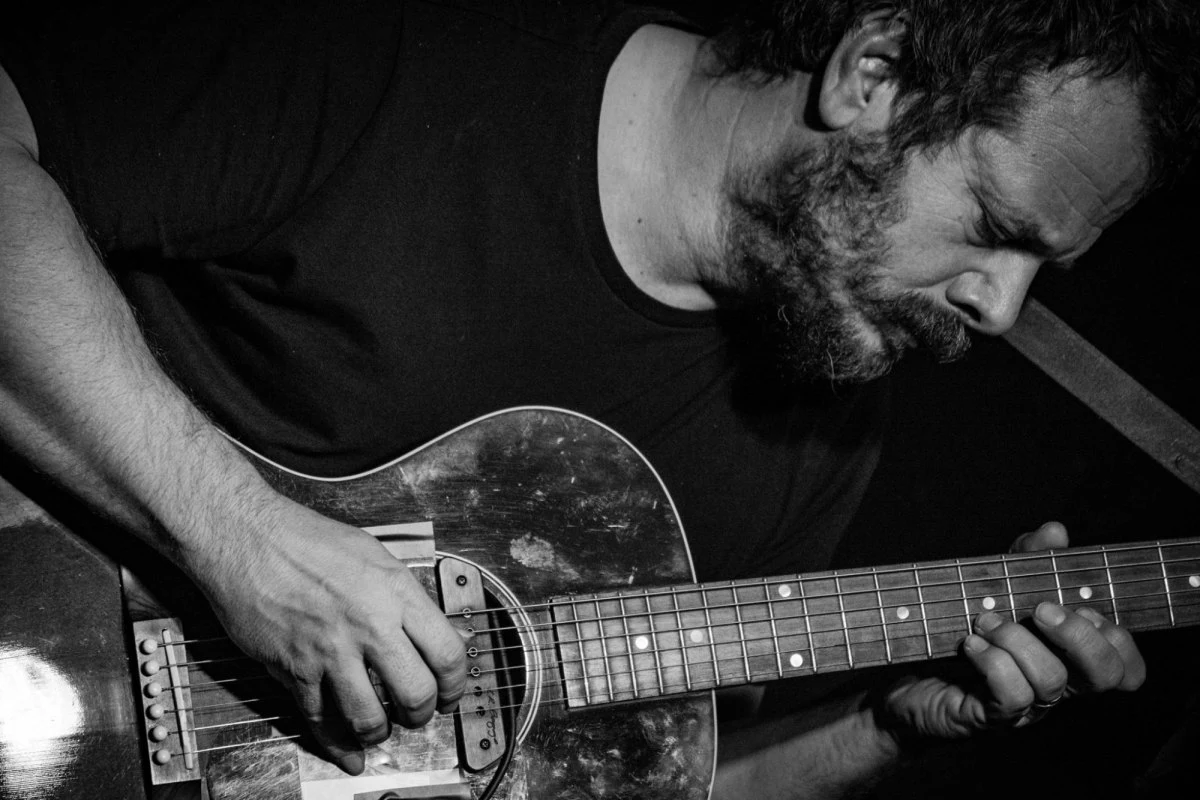
I play and write only in DADGAD. Here is what you need to get started: how to tune your guitar, the basic chords, where the tuning comes from and the most famous songs played in it.
What is DADGAD tuning
DADGAD is an open guitar tuning: the six strings, from the lowest (6th) to the highest (1st), are tuned D, A, D, G, A, D. The name is simply the list of notes.
Played open, the strings make a D suspended chord (Dsus4), neither major nor minor. That is why DADGAD works for bright pieces and for melancholy ones alike, and why it is also called the "Celtic tuning": it is the tuning most used to play Irish and Scottish music on the guitar.
How to tune your guitar to DADGAD
From standard tuning (E A D G B E) you change only three strings, and each one goes down a whole step, that is two frets:
- the 6th string goes down from E to D
- the 2nd string goes down from B to A
- the 1st string goes down from E to D
The 5th (A), 4th (D) and 3rd (G) strings stay as they are. To check by ear: the 6th string at the 12th fret sounds like the open 4th, the 5th string at the 12th fret sounds like the open 2nd, and the open 1st is the D one octave above the open 4th.
Below are the six strings: touch them one at a time, or play them all, and tune your guitar by ear.
The six open strings in DADGAD. Touch them.
| String | Note | Octave | Frequency |
|---|---|---|---|
| 6 | D | D2 | 73.42 Hz |
| 5 | A | A2 | 110.00 Hz |
| 4 | D | D3 | 146.83 Hz |
| 3 | G | G3 | 196.00 Hz |
| 2 | A | A3 | 220.00 Hz |
| 1 | D | D4 | 293.66 Hz |
DADGAD chords
In DADGAD the most beautiful chords are the ones that let the open strings ring: one or two fingers give you a full chord, and the open strings add the extra notes. Here are the ones to start with, in the key of D. The number is the fret to press, the empty circle is an open string, × is a string not to play.
The most natural keys are D and G. For other keys use a capo: with the capo at the 2nd fret the same shapes sound in E.
Why DADGAD sounds the way it does
Three strings are tuned to D and two to A: while the left hand plays the melody, the open strings keep ringing underneath, like a drone. A single guitar sounds full, with a tone that recalls the harp and the modal instruments of the Mediterranean. It is why I chose it and never went back.
Where it comes from
DADGAD was made famous in the early 1960s by the English guitarist Davy Graham, who according to many sources worked it out while travelling in Morocco, looking for the sound of the oud on the guitar. His arrangement of the traditional Irish song "She Moved Through the Fair" became a model for those who came after.
Jimmy Page of Led Zeppelin used it on "Black Mountain Side" (1969), "White Summer" and "Kashmir" (1975). The French guitarist Pierre Bensusan has played only in DADGAD for decades and is the reference for fingerstyle players who use it.
Famous songs in DADGAD
- "Kashmir", "Black Mountain Side" and "White Summer" by Jimmy Page with Led Zeppelin
- "She Moved Through the Fair" in Davy Graham's arrangement
- most of Pierre Bensusan's repertoire
- many traditional Irish and Scottish tunes: jigs, reels, slow airs
And mine: "Dadigadì", "Seluna", "Duende", "Dancera", "Donegal", "Solisud" and every track on DADGAD Guitar and DADGAD Bootleg vol.1.
Hear how it sounds
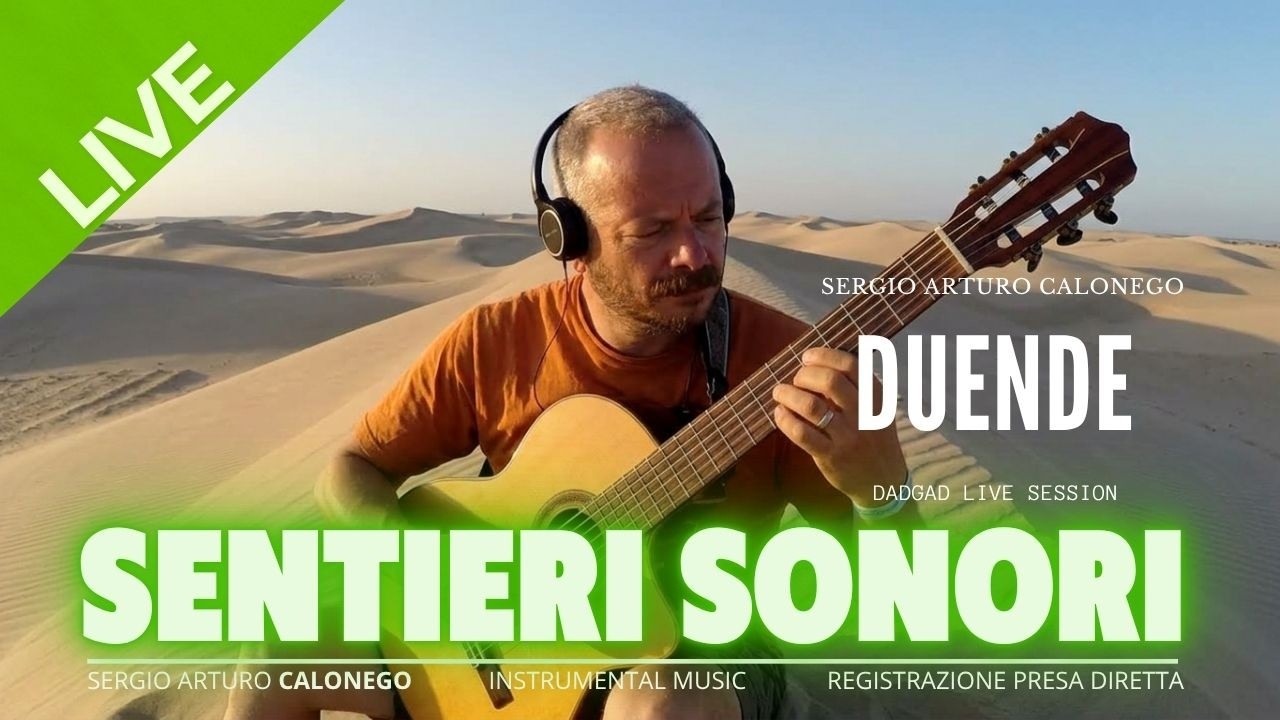
Duende, Dune du Pilat 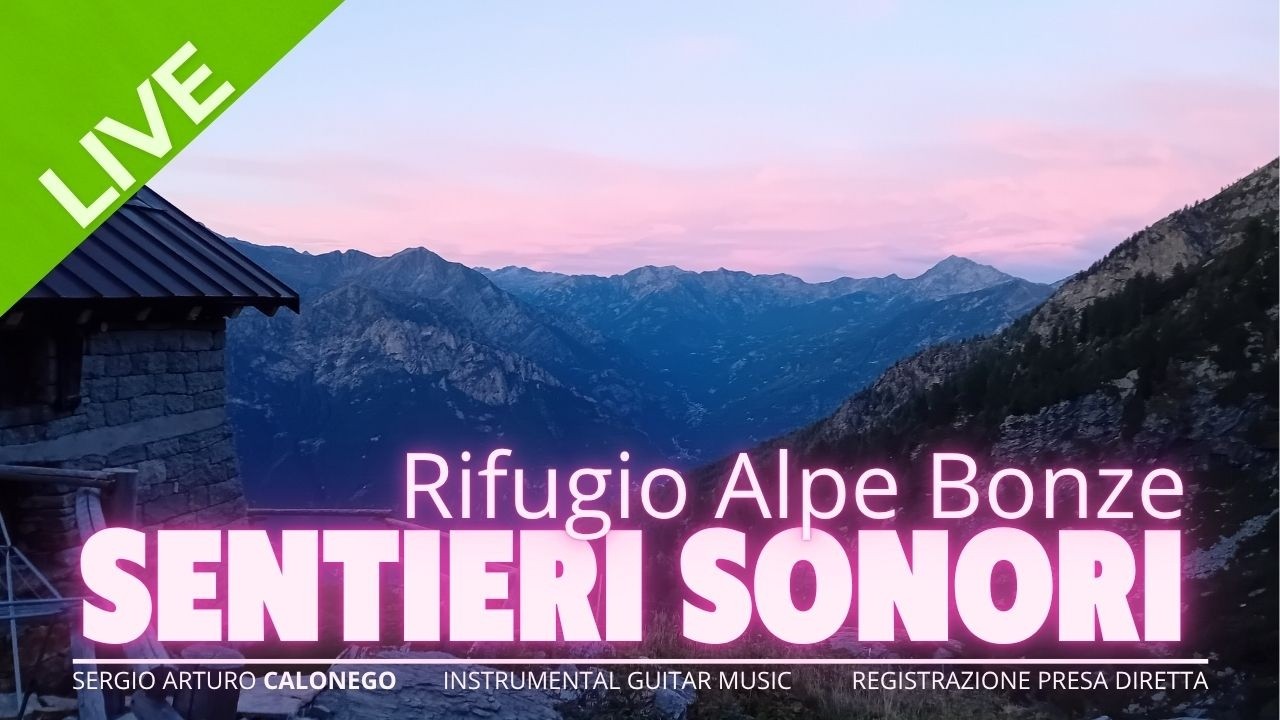
Sentieri sonori, rifugio Alpe Bonze 
Concerto, Villa Tittoni
Full concerts, played in DADGAD from start to finish: you will find them all on the Videos page.
Strings
Regular acoustic guitar strings are fine. Since the 6th string goes down a whole step, some players prefer a slightly heavier low string, so it stays tight and does not buzz on the frets.
DADGAD live
I talk about this at my concerts too. In the talk-and-concert DADGAD, the story of a tuning I explain the tuning and play it, for libraries and schools. In Sentieri sonori I take it outdoors, at dawn and at sunset.
Frequently asked questions
Is DADGAD an open tuning?
Yes: the open strings make a chord, D suspended (Dsus4). Since it is neither major nor minor, some call it a modal tuning.
What is the difference between DADGAD and drop D?
In drop D (DADGBE) only the 6th string is lowered. In DADGAD the 2nd and 1st strings are lowered too, and the open strings make a chord.
What is the difference between DADGAD and open D?
In open D (DADF#AD) the open strings make a D major chord. In DADGAD there is a G instead of the F#: the chord is suspended, neither major nor minor.
What key is DADGAD in?
The most natural keys are D and G. With a capo you change key while keeping the same shapes: at the 2nd fret you play in E.
Why is DADGAD called the Celtic tuning?
Because it is the tuning most used to play traditional Irish and Scottish music on the guitar: the open strings recall the drones of bagpipes and harps.
Who invented DADGAD tuning?
Davy Graham made it famous in the early 1960s. Who used it first is unclear: Graham and Martin Carthy each credited the other.
Is it hard to switch from standard tuning to DADGAD?
Three of the six strings stay the same, so many shapes on the middle strings do not change. The new thing is learning to let the open strings ring.
Can I tune my guitar to DADGAD on this page?
Yes: in the section on how to tune you can hear the six strings, one at a time or all together, with the frequency of each.